
Home › Guides
Self-tape: a method for a tape casting directors watch to the end
A self-tape is not an artistic creation: it is a working document. Casting wants to see your acting, hear the lines and understand your choices. Here is the method, from the brief to delivery.
1. It is not an artistic creation
No staging, no set dressing, no music, no editing effects. Anything that does not serve your acting pulls focus. Focus on yourself, the scene and your off-camera partner.
2. Read the brief to the end
Required framing (chest, waist, wide for the slate), number of scenes and takes, slate or not, file name, format, deadline, language or accent. Ignoring an instruction can rule out a good tape before it is even watched.
3. Framing
By default: chest shot, camera at eye level, eyeline just off the lens on your reader's side. Only look into the lens if asked. At the studio, framing is set; check on the monitor that your gestures stay in frame.
4. Sound: stay behind the mic
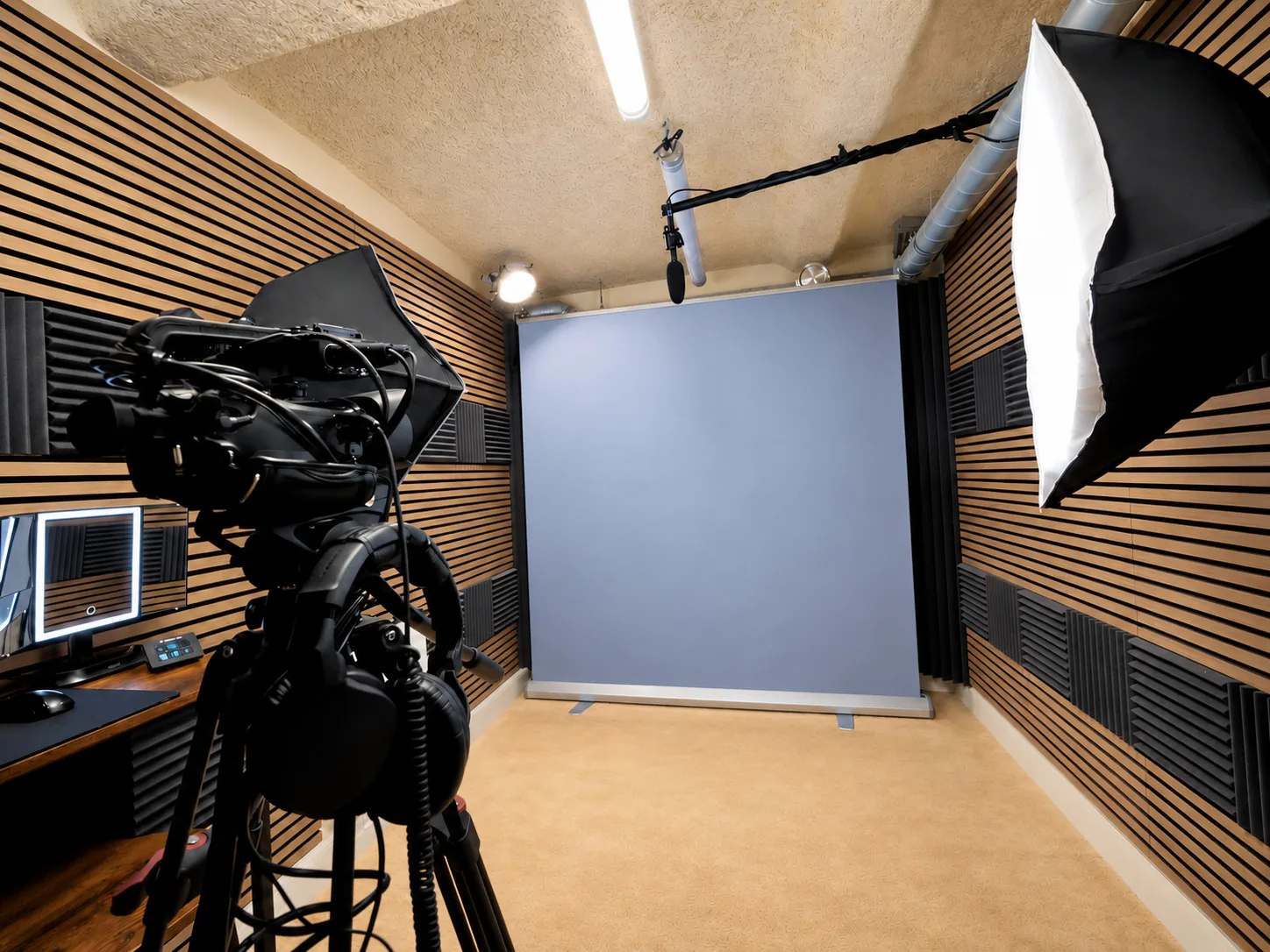
The shotgun mic sits in front of you, above the frame. Do not move past it: if you step beyond it, the mic ends up behind you and the sound gets muffled. Find your mark on the floor and come back to it between takes. The rooms are acoustically treated, not soundproof: if outside noise covers a key line, do another take.
5. Light and image
Do not move the lights or the camera. Light make-up, matte skin (blotting wipes provided), plain clothes: avoid thin stripes, logos and pure white.
6. The reader
Off-frame, next to the camera, at your eyeline. They read plainly, a bit softer than you, without acting for you. Run the scene together for a few minutes before shooting.
7. The slate
If requested: name, agent, height, city, or exactly what the brief lists. Facing the camera, wider if specified. Ten to fifteen seconds, natural.
8. Two or three takes, not fifteen
A first take with your choice, a second with a different intention if the text allows. Beyond that, energy drops. Note the number of your best take straight away.
9. Trim, name, send
Your files are in your Dropbox folder. You can trim the start and end directly in the Dropbox desktop app, or download the video and edit it in your own software. Name the file as requested, send a link rather than an attachment, check the link opens without an account, and copy your agent.
Before you come: practical info
- Access
- 3 rue Charles Baudelaire, building T, 75012 Paris. The access code is in your confirmation email. You can arrive 15 minutes before your slot.
- What is set up
- 4K camera, lighting, boom shotgun mic, backdrop, one-button recording. Framing and lighting are set when you arrive.
- What to bring
- Your sides (printed or on a tablet), one or two plain-coloured outfits, something to watch the monitor feed in the Yellow Room (phone or tablet; a tablet is provided in the Red Room).
- Files
- Encoded in 1080p and dropped during the session into your personal Dropbox folder, kept 30 days. 4K file on SD card as an extra.
- Reader and coach
- The Yellow Room fits one actor on camera with a reader or a coach. If you come alone, a reader (€50/h) or a coach can be booked as an extra.
- Invoice
- The invoice is emailed automatically at the start of the following month. Handy if a production covers your session or you recharge it.
FAQ
How long should a self-tape be?
As long as the scene requested. A ten to fifteen-second slate if asked, then the scene, nothing more.
Should I know the lines by heart?
Yes: your eyes need to stay free to play with the reader. For a very long scene received the day before, lines off-frame can help, but it shows.
Should I edit my self-tape?
No, unless asked. Trim the start and end; do not stitch together pieces of different takes.
Where can I shoot a self-tape in Paris?
In an equipped studio like ForTape (Paris 12): 4K camera, lights and mic set up, takes delivered on Dropbox during the session, from €24 per hour incl. VAT.